Showing posts with label inspiration. Show all posts

Thursday, September 10, 2009

Chapter 83.7: My 9/10 Novel

Living in northern New Jersey, it's difficult, if not impossible, to not think about the events of 9/11, 2001. Indeed, it's probably bad for your mental health not to think about it from time to time if you lived through it here. I suspect I will always remember exactly where in my commute I heard about the first plane hitting one of the Twin Towers. I chastised myself for assuming we were under attack — especially after the guy on WDHA amended his comments saying that it had been a small plane, not a large plane as he initially had heard.

In between the time I parked my car and turned off the engine and I entered my office, the second plane had hit the second tower. It immediately struck me: We're at war.

By 9/10, 2001, I had begun my first novel and written about thirty pages. I was stuck not on what to write next but when did my story occur. Was the time significant? On 9/11, I realized that we had just experienced an important line of demarcation in history; there is a pre-9/11 world and a post-9/11 world. From there, I had to determine how this affected my novel

I decided to use it obliquely. My novel begins on 9/10, 2000 and ends on 9/10, 2001. Because such attacks were barely contemplated by the average person, nothing more than faint glimpses of fear and omen are displayed. The story takes place in Hoboken, New Jersey, a town I know well that lies directly across the river from New York City. Ground Zero is within view. Indeed, the clouds of smoke and debris floated above the river after the towers fell.

Whether my oblique references to the tragedy of 9/11 should remain part of my novel — and not an overt focus of it — has been a frequent point of discussion with my initial readers. Usually I bring it up, but some of my readers have anticipated the question. I still think it's more than just a moment of inspiration; I think it's important to the story, subtle though it remains.

So, each year, I think a lot about the people who experienced 9/11 first hand. I lost a friend that day and thank God that I didn't lose more people who were close to me. I lost some innocence as well, which is largely what my novel is about — not my loss of innocence, but the nation's; or maybe it's that our eyes were opened to the terrible possibilities. And I reflect on those fictional people who mean so much today who came to life on 9/11.

With my young innocents at home, I have had almost no time to work on the latest novel much less to send my "finished" one out to agents. I respect their time and my own too much to look for representation when I don't have the time to respond appropriately if I should actually get an offer. It's like going fishing without the strength to reel in the fish.

Remember 9/11, my friends, in your own way. It's important for all Americans, regardless of political party or ideology.

Friday, February 01, 2008

Chapter 72.5: Is Inspiration Enough?


I wasn't alive during the time of John F. Kennedy, and during brother Robert's tragically short campaign I was too young to understand anything that didn't mean "food." So I don't know exactly what it's like to have lived while a politician was able to inspire us. The closest thing to an inspirational leader was the fictional Jed Bartlet during the West Wing years, and even that wasn't really inspirational.

So I read George Packer's story in the New Yorker with great interest. So too, Paul Krugman's essay on the lasting effect of John Edwards on the campaign.

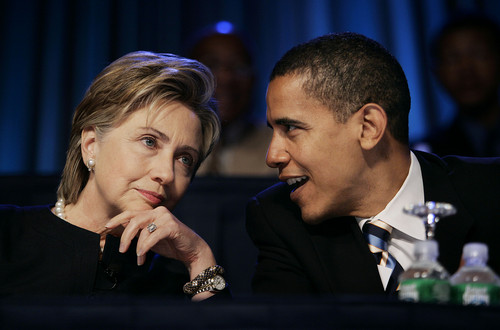
Packer outlined differences between Sens. Obama and Clinton and their presumed approaches to the presidency. Obama would be an 'Inspirer in Chief' and offer hope to the masses. Not a bad goal at all, and I could subscribe to that. But if he's as disorganized as Packer suggests, then we'll all pray to God that he has an excellent team of staff to pick up after him. All presidents need that, but a President Obama might need it more. President Hillary Clinton would be a leader that "would have to use unifying rhetoric and reach across partisan lines. But ... she is readier to march ahead and let those who will follow her do so." As Packer adds, "These rival conceptions of the Presidency—Clinton as executive, Obama as visionary—reflect a deeper difference in how the two candidates analyze what ails the country."

I have said in this blog and in conversations with friends of various political persuasions, I consider myself a moderate but I also found the populism espoused by John Edwards to make the most sense. I respect that he said, in effect, to have the healthcare system most of us believe we need (i.e., one that covers all Americans), we're going to have to raise taxes. This would be difficult to carry out, admittedly. Clinton's suggested health plan is very much like Edwards' plan. [Which makes me wonder, would he be a good choice to fill the role of Secretary of Health and Human Services, or lead the healthcare charge as Vice President, or should he be Attorney General, where his talents seem best suited? And if he had any of those roles, would a President Clinton or a President Obama be concerned about the prospect of cabinet member Edwards trying to draw too much credit and run against the sitting president?] I have no doubt that a President Clinton would have an active role in shaping that national discussion. How would a President Obama inject his vision of national healthcare? It could be a wonderful plan, and I'm willing to hear him discuss it. But Edwards' plan sounded best to me.

New Jersey is among the nearly two dozen states that will hold a primary on Super Tuesday (soon after the Super Bowl. Go Giants!), and I'm still unsure who I'll vote for. I'm probably leaning toward Clinton at the moment, she seems more able to step in and lead. But Obama is an inspiring figure. So I'm left wondering, Is Inspiration Enough? Sen. Obama's comments about Iran earlier in the campaign concerned me. Is he so naive to think that having a simple conversation with the Iranians will actually be perceived as a simple conversation? Good God! People who can honestly say the met the president at the White House -- any president -- seem to others as if they've reached a pinnacle. That's why photo ops are considered important. They lend credibility to the poor schmoe next to the hot shot.

The wife of a friend of mine ran for public office in their home town; she used a photo of her with then Sen. Jon Corzine in her publicity. It made her look like she had connections, which was the point. She'd never met him before the evening when the photo was taken. I suspect the other candidates in line after her to get their photo taken were similarly unfamiliar with Sen. Corzine. At a certain level, it's all about appearances.

So publically speaking with a high-ranking official of a nation we publically accuse of sponsoring international terrorism is a mistake. No ifs ands or buts about it. Would a President Obama agree with campaigning Obama? I don't know. And I see it as something that would create tension in an Obama White House. Like the fictional President Bartlet, his administration would make a lot of early mistakes. I'm not sure we can afford to let him struggle so much.

But I also don't know that we can afford to have a Republican continue in the office for the next four years. So can Sen. Clinton defeat Sen. McCain? That's a subject for another day. If I'm so inspired.